
Pamela Colman Smith and the Rider Waite Tarot deck

Jun 7, 2019
3 min read
Updated: Jun 9, 2019
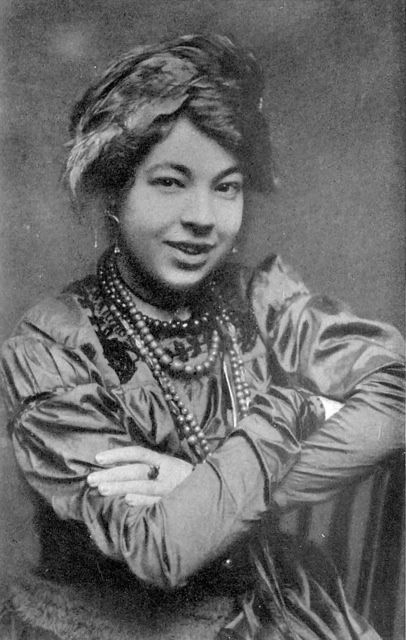
When I look at this fabulous gypsy of a woman, I always feel sad about the way she was forgotten about for such a long time. It is no exaggeration to say the Rider Waite Tarot is one of the most familiar and famous decks world wide. It has been my deck of choice from when I first started to read tarot cards and I never tire of it or find it to lack energy or information. And yet even now, her name as the illustrating artist of all 78 cards, is rarely used or mentioned. For many years it was not even on the packaging the cards came in.
First published in 1910, the deck was illustrated by Smith following direction and instruction from the academic and mystic A.E. Waite and was published by the Rider Company. I will talk more about Arthur Waite in another post, a fascinating occult scholar.
Pamela Colman Smith was born in Pimlico. She was the only child of an American merchant from Brooklyn, New York, Charles Edward Smith, son of Brooklyn mayor Cyrus Porter Smith, and his wife Corinne Colman. The family was based in Manchester for the first decade of Smith's life, but they moved to Jamaica in 1889.
By 1893, Smith had moved to Brooklyn, where, at the age of 15, she enrolled at the Pratt Institute, which had been founded six years earlier. There she studied art under Arthur Wesley Dow, painter, printmaker, photographer, and influential arts educator. Her mature drawing style shows clear traces of the visionary qualities of fin-de-siècle Symbolism and the Romanticism of the preceding Arts and Crafts movement. While Smith was in art school, her mother died in Jamaica, in 1896. Smith herself was ill on and off during these years and in the end left Pratt in 1897 without a degree. She became an illustrator; one of her first projects included The Illustrated Verses of William Butler Yeats.
In 1899 her father died, leaving Smith at the age of 21 without either parent. She returned to England that year, continuing to work as an illustrator, In 1901, she established a studio in London and held a weekly open house for artists, authors, actors, and others involved with the arts.
Smith wrote and illustrated several books about Jamaican folklore, including Annancy Stories (1902) which were about Jamaican versions of tales involving the traditional African folk figure Anansi the Spider.
She also continued her illustration work, taking on projects for William Butler Yeats . She illustrated Bram Stoker's last novel, The Lair of the White Worm in 1911.
Smith supported the struggle for the right to vote, and through the Suffrage Atelier, a collective of professional illustrators, she contributed artwork to further the cause of women's suffrage in Great Britain. Additionally, Smith donated her services for more poster designs and toys to the Red Cross during World War I.
In 1903, Smith launched her own magazine under the title The Green Sheaf, The Green Sheaf survived for a little over a year, a total of 13 issues.
In 1907, Alfred Stieglitz gave Smith an exhibition of paintings in New York at his Little Galleries of the Photo-Secession, making Smith the first painter to have a show at what had been until then a gallery devoted exclusively to the photographic avant-garde. Stieglitz was intrigued by Smith's synaesthetic sensibility; in this period, Smith would paint visions that came to her while listening to music.
It was the poet Yeats who introduced Smith to the Hermetic Order of the Golden Dawn, which she joined in 1901 and in the process met Waite. When the Golden Dawn splintered due to personality conflicts, Smith moved with Waite to the Independent and Rectified Rite of the Golden Dawn (or Holy Order of the Golden Dawn). In 1909, Waite commissioned Smith to produce a tarot deck with appeal to the world of art, and the result was the unique Waite-Smith tarot deck.
The illustrations for this deck are heavy with symbolism but with simple backgrounds, each card giving us a complete scene. The deck was quite different from all previous representations. It was also innovative depicting full scenes with figures and symbols on all of the cards not just the Major Arcana or court cards. Her distinctive drawings have become the basis for the design of many subsequent packs.
The use of colour, the incredible amount of detail in every scene, the rich and evocative use of symbols from across many schools and traditions make this an astonishing body of work as well as an incredible deck to use.
A fascinating woman, an incredible artist and an extraordinary legacy, not to be forgotten or dismissed.
*Disclosure: this post contains affiliate links, meaning if you click on them and buy something, you don’t pay any extra, but I may get a small commission.*


Comments